

Two years ago, I wrote about season 2 of House of the Dragon, and as expected, I’m now writing about season 3.
I’ve written about it along the way, but I wanted to get my thoughts in one place, so that’s what this is, organized by theme (as one does).
I. Masters & Servants
In the book, Fire and Blood, Mysaria’s fate is one of the worst in book that details all the worst possible fates imaginable. I found her characterization in the show interesting, going from Daemon’s whore to the queen of the whores in King’s Landing to Rhaenyra’s most trusted advisor and paramour, because she, like most people, regresses to her younger, more vulnerable self in very visible ways when under duress, as we see in the scene in the throne room with Sylvie, the madam from King’s Landing. In the scene with Rhaenyra at the end of season 3 episode 7, we see Mysaria go from respected advisor to sycophantic seductress in a moment, and it becomes just another job to her to seduce Rhaenyra. And Rhaenyra isn’t a child anymore, she realizes that she’s being manipulated and immediately sends Mysaria away, but not before Mysaria gets in her last word.
The dynamic between the Targaryens and the Dragonseeds in the show as well as the reaction to them is fascinating because the audience becomes straight-up aristocracy and inbreeding apologists, even though it’s perfectly clear why Ulf (and eventually Hugh) aren’t unconditionally loyal and eventually defect from Team Black. All Daemon and Rhaenyra had to do was show a tiny modicum of respect to their employees, and instead they gave them unworldly cosmic powers in ginormous, sentient weapons of mass destruction and treated them like the lowest of serfs, and they dug their own graves.
II. Parents & Children

The difference between Alicent and Rhaenyra in terms of motherhood is that Rhaenyra doesn’t see her children as living shackles to a life she never wanted since they were conceived through love with men that cared for her in return, and Alicent might love her kids, but her resentment towards their very existence, conceived through marital rape in the guise of duty, overwhelms that love. Alicent is a worse mother than person, and Rhaenyra is a worse person than she is a mother, and that’s one of many reasons for Alicent’s “eye for an eye” outburst at Driftmark.
Girldad Daemon Targaryen was NOT on my BINGO card but to his credit, at least he tried to protect Rhaena and didn’t immediately go for child murder at Tumbleton (just eventually), which is honestly real development from seasons 1-2. That said, this was the funniest post from this season, everybody else can go home.
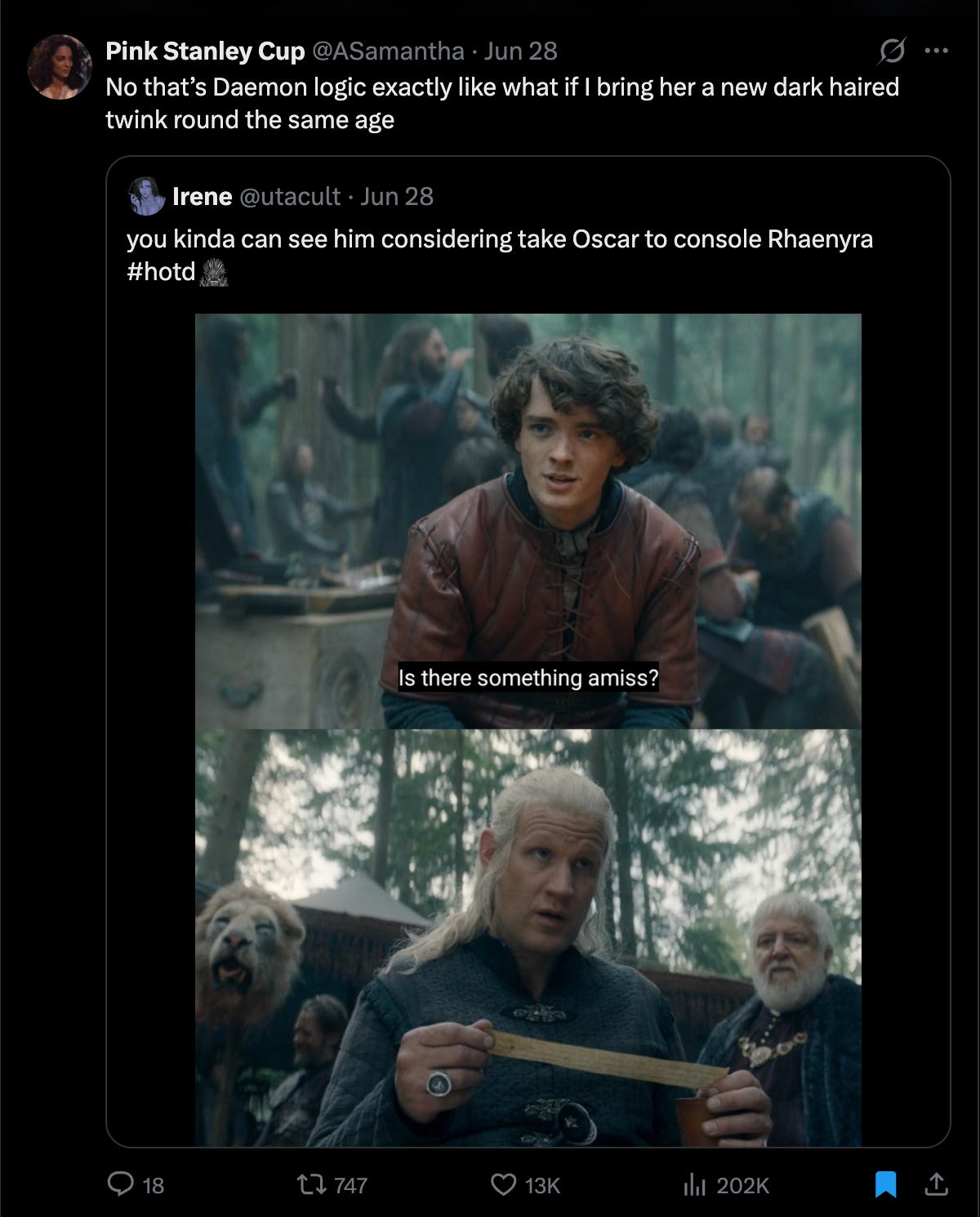
It’s interesting that Rhaenyra seems to realize Viserys wasn’t as good a father as she believed, but Helaena either never came to that realization or did come to that realization and was weaponizing their father against Rhaenyra.
Team Green’s real father figures:
Aegon: Otto Hightower
Aemond: Criston Cole
Helaena: Thinks Alicent reproduced through human parthogenesis
Daeron: Gwayne Hightower and Ormund Hightower
III. Knights & Queens (Kings & Lionhearts)
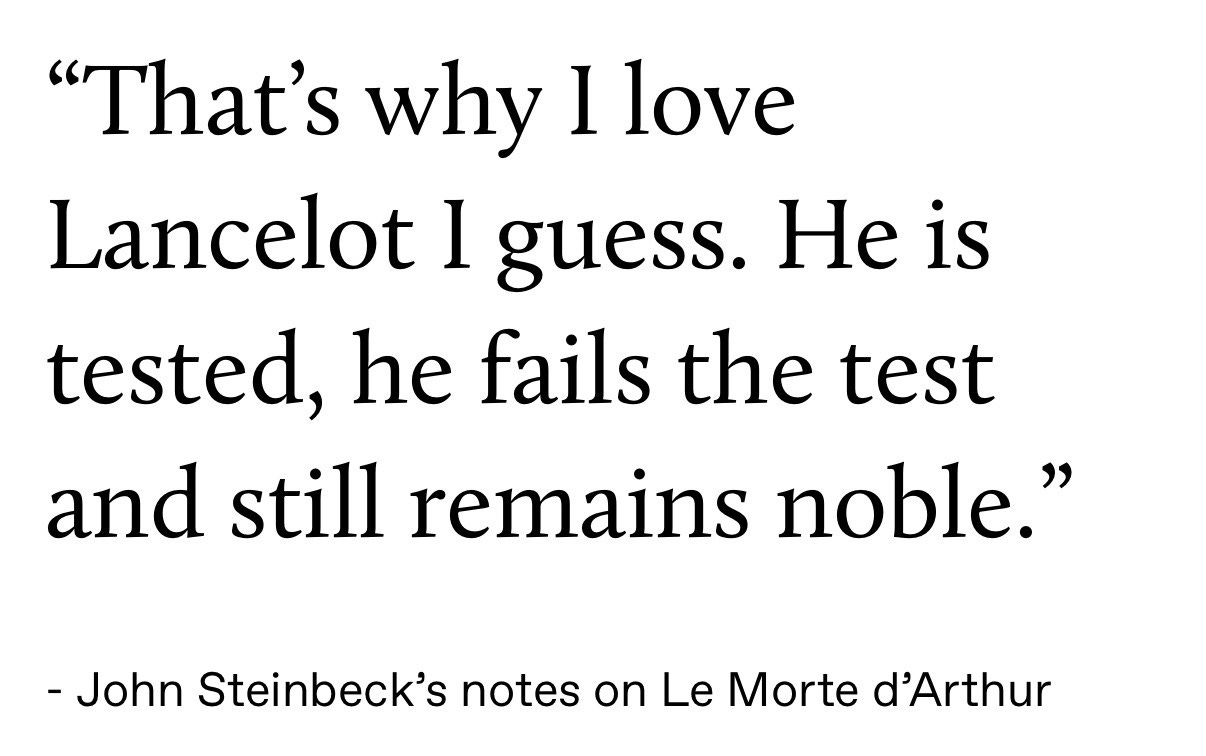
The general audience really didn’t like Criston Cole (Fabien Frankel on the other hand is objectively gorgeous), and understandably so given how completely pathetic and also insufferably misogynistic he was to Rhaenyra. But, Criston, more than any other character in HotD, is a Knight, for better or for worse.
All Criston knows is to aspire to his nebulous vision of honor, and even when he fell short (which was more often than he realized), he clung to that identity. I found his dissolution with knighthood from the Battle at Rook’s Rest (season 2, episode 4) until his death in season 3, episode 6 to be compelling because it really highlighted that death is horrible but also banal, and as a servant, his body belongs to the Targaryens and their dragons, and there’s nothing he can do about it.
Relatedly, and this is more than a little self-aggrandizing but I guess I’ve always felt an affinity to queenship narratives because I’ve always felt somewhat alienated from the rest of the world even as I’m part of it. I’m hyper observant with a fantastic memory, so I can accurately predict things (especially political outcomes) that everybody else misses1 since I can see beyond superficial exteriors and my own emotions into the fundamental motivations of human behavior. But it makes me feel isolated that people can’t (or won’t) see what I do, and I just have to live with that.
In Arthurian legend, the legendary King Arthur is betrayed by his wife Queen Guinevere, as she has an affair with his most faithful Knight of the Round Table, Lancelot du Lac. What always compelled me about this myth is that there’s never any doubt that Guinevere and Lancelot sinned, that they did grievous wrong onto Arthur, whom they both loved, and broke their vows along with Arthur’s heart. But regardless, they both retain their honor, their nobility and pride, even as they plunged their realm into doom with their love, and they go to their deaths with dignity and grace.
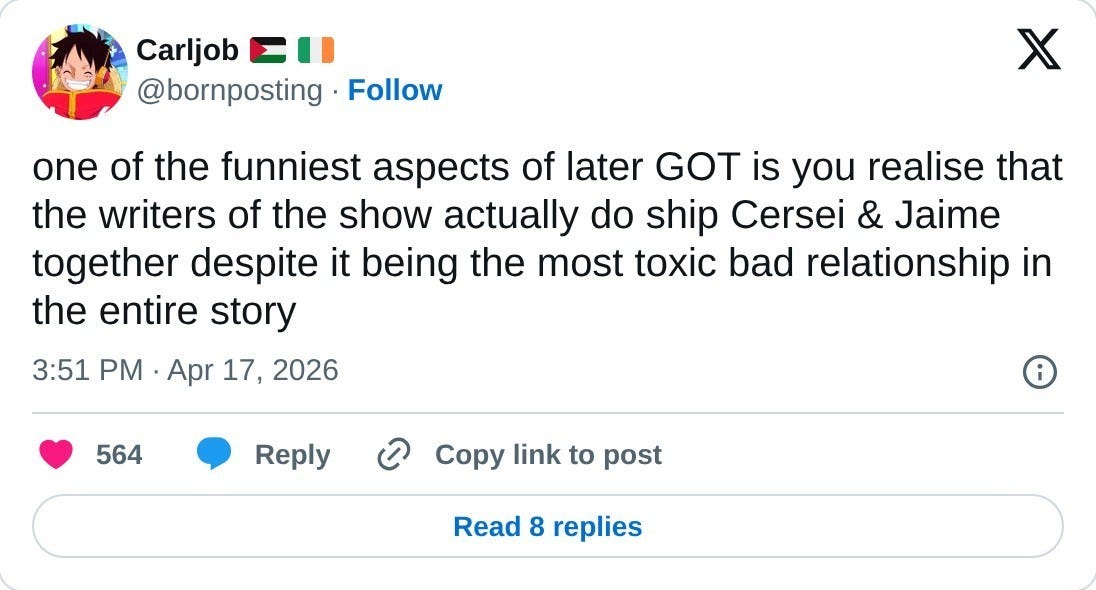
George R.R. Martin has always been obsessed with the concept of knighthood though, just look at Jaime Lannister. As we all know, I’m a big Lannister girlie, and I won’t go into it at this point but well, this is the best part of the latter half of the original Game of Thrones series and there’s no contest.
IV. War & Peace
Something that I’ve been thinking about this entire season is that House of the Dragon is more explicitly anti-war than the original Game of Thrones series, and that seems to make a lot of people really uncomfortable and even angry on a subconscious but fundamental level.
Unlike the battles in original series, there is zero glory to be found in the Dance of the Dragons, which is arguably the goal of the showrunners. They often shy away from showing violence in itself, and instead show the aftermath and how it impacts others, including Blood and Cheese, where the camera shows Helaena’s horrified reaction instead of her son’s beheading, as well as the Brackens and Blackwoods boldly mocking one another like the dumb teenagers they are immediately followed by the carnage of a battlefield where there’s no sign of life.
Jacaerys Velaryon dies in the most anticlimactic way, with the dramatic soundtrack fading out, and he drowns unceremoniously while shot through with arrows, and to the cheers and jeers of his enemies. Rhaenys Targaryen kamikazes herself at the Battle of Rook’s Rest, realizing that her and her dragon’s life is forfeit so she might as well die with honor.
Rhaenyra Targaryen, the Dragon Queen, takes the Iron Throne with surprisingly little fanfare after her oldest son’s death. Daemon Targaryen cuts through the guards in Kings Landing as if they’re made of butter, and Rhaenyra clumsily beheads Otto Hightower with tears streaming down her face. She’s never really used a sword before, she’s never killed a man, but she eventually succeeds and can’t help the horror she feels at taking a human life, even one that wronged her so.
V. Death & Life
Ultimately, is no glory in death, in being burned alive or drowning, in being cut open by your husband who supposedly loves you in the hope you deliver a living son, in being beheaded by a woman that has been yearning all her life to be right where she is and still can’t fill the grief inside of her.
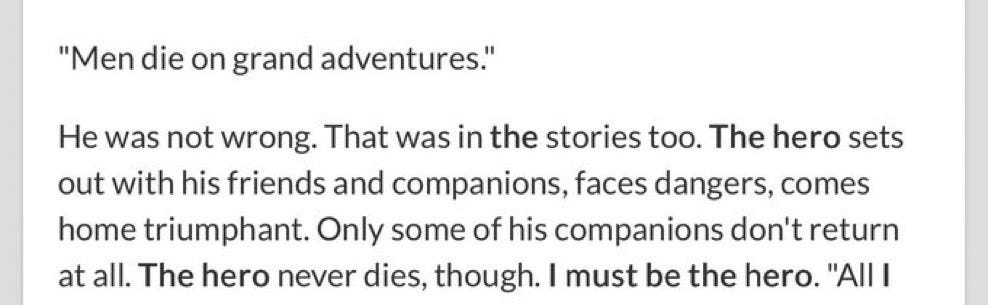
Daemon is a character who grew on me, and part of that is Matt Smith’s performance, but also, I think I sort of get him more now.
Daemon spends most of his life entire life thinking he’s nothing short of a God because he’s a Targaryen and a dragonlord, the rider of Caraxes and the wielder of Dark Sister, and a prince of the realm. After taking King’s Landing, he’s still not satisfied, he doesn’t want to sit around, he wants to conquer and fight and feel something, which he never does unless he’s fighting his own mortality. But, day by day, year by year, as his brother and wives drop dead, as he himself starts feeling his age, he’s forced to reckon with it.
He’s not as nimble or as trigger-happy as he once was and his bones creak more than they ever did; the walls are closing in and he’s got less and less to live for, and so Daemon goes to the Gods Eye. He’s clear eyed about the murder suicide he’s signed up for with Aemond, the nephew who desperately wants to be his uncle but doesn’t have any idea that he’ll never grow as old; his hair won’t gray, he’ll never toss his laughing son up in the air, never sleep in a bed with his wife again.
I sometimes wish I could ask the untimely dead, and was it worth it?
In any case, I’m looking forward to season 4, but lot of people will be disappointed.

As Joffrey Baratheon tells Margaery Tyrell, “Rhaenyra Targaryen was murdered by her brother, or rather his dragon. It ate her while her son watched. What’s left of her is buried in the crypts right down there.“ Rhaenyra, the girl that we met in the first episode, passionate and beautiful and so very alive, died long before her physical body gave out, bit by bit as her sons were taken from her, and maybe, just maybe, she’s been dead since the very beginning.
If the original Game of Thrones2 is about watching House Stark rise from the ashes and triumph against all odds, House of the Dragon is about watching Rhaenyra Targaryen die, it’s about Alicent Hightower watching Rhaenyra Targaryen die. The two of them habitually regress to their 15-year-old selves when around one another, willfully trying to pretend they haven’t spent the last 20 years hurting and being hurt by one another. And ultimately, Alicent ends up being the Final Girl of this story, the Final Woman; she outlives everybody she’s ever loved, and welcomes death when it comes, and that’s the story ends.
I could make bank gambling if I didn’t find it inherently sinful
For the record though, Game of Thrones did ultimately have a downer ending despite this, and that’s arguably a good thing even if the general audience did NOT like it
Even though I know almost nothing about Game of Thrones or House of the Dragon, I enjoyed this!
Also, I'm looking at your 2026 predictions from January, and I'm thinking it might be fun if you updated your political predictions before the midterms. A lot of what you said still holds, but it does feel like an even bigger blue wave is upon us! :)