

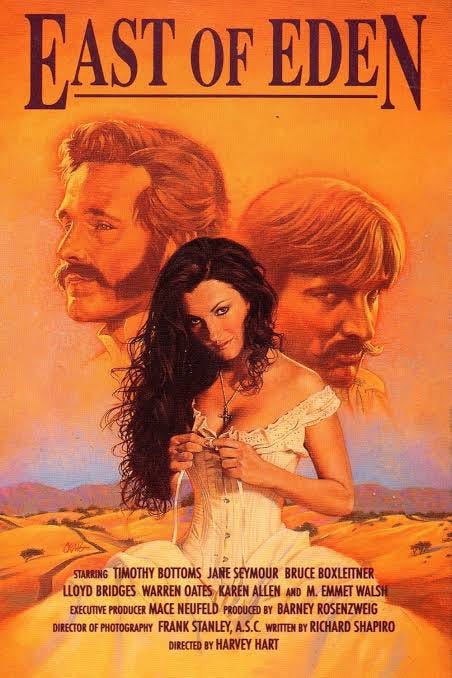
The Netflix adaptation of John Steinbeck’s East of Eden is coming out on October 1. East of Eden is one of my favorite books, and even though Steinbeck’s The Grapes of Wrath has sold more books, I’ve always considered Eden to be his magnum opus.
The novel follows two generations the Trask family. Adam Trask arrives in California with his pregnant wife, Cathy Ames, and settles in the Salinas Valley of California, along the U.S. Route 101 between Los Angeles and San Francisco. Cathy, one of the most pernicious villains in English literature, gives birth to twin boys, Aaron (Aron) and Caleb (Cal), and then abandons the family to a life of sin. The boys grow up as polar opposites, Aron as virtuous and dutiful as Cal is wild and rebellious. As they reach adulthood, their differences and rivalry come to a head, and mass family tragedy ensues in front of the backdrop of World War I.
I was born an atheist and I will die a militant atheist. But, despite being an overt Biblical allegory, East of Eden has always fascinated me, partly because Steinbeck himself was openly agnostic as an adult to the extent he didn’t believe in an afterlife.
If East of Eden is about one singular concept, it’s about timshel. Adam whispers timshel to Cal at the end of the novel; Steinbeck carved the Hebrew word into a box for the manuscript of the original novel.
So the story goes, Adam’s servant, Lee, is bothered by the original Cain and Abel story, by its predetermined moral outcomes. through Lee’s voice, Steinbeck coins “timshel”, a term that is inspired by the Hebrew word “timshol”, which originated in the Torah, and has been translated multiple ways.
“Timshol”: You shall/will rule
King James: Thou shalt rule over him (a promise to rule, defeat of sin)
American Standard: Do Thou (an order, obedience demanded)
Steinbeck: Thou mayest (therefore thou mayest not), choice
But timshel is Steinbeck’s own creation, and is a fully American one at that. The religious origins of the term have been diluted, and the meaning has transformed from “rule over” to making the active choice to be good or bad, not out of divine higher purpose or out of guilt, but of free will.
Steinbeck turned an allegory of Cain and Abel into an argument, the ultimate argument, for human freedom. Instead of repeating old patterns, family dynamics, generation after generation, Timshel breaks that determinism, and Cal chooses to forgo the sins of his mother. Lee teaches him that his impulses are human, but his choosing to not act on them defines his character, not the blood that flows through his veins.
At the end of the work, after Cal is guilt ridden by the death of his brother, Adam tells him that what he has is the freedom to decide what comes next. The moral of their story, if there is one at all, is that we carry both good and evil inside us, and we have the ability and the privilege to choose who and what we will be.
My family dog, Jude the golden retriever, is named after the eponymous Jude in Thomas Hardy’s Jude the Obscure, and if Hardy is the universe with no hope for freedom from grief, Steinbeck is the universe where we may still choose the moral center, still choose happiness.
Steinbeck’s work isn’t centered around the purifying power of shame or sin, but rather free will and personal responsibility, profoundly irreligious, and an ethos that is imbued with dual fixations on morality and mortality, which needless to say, I call my own.
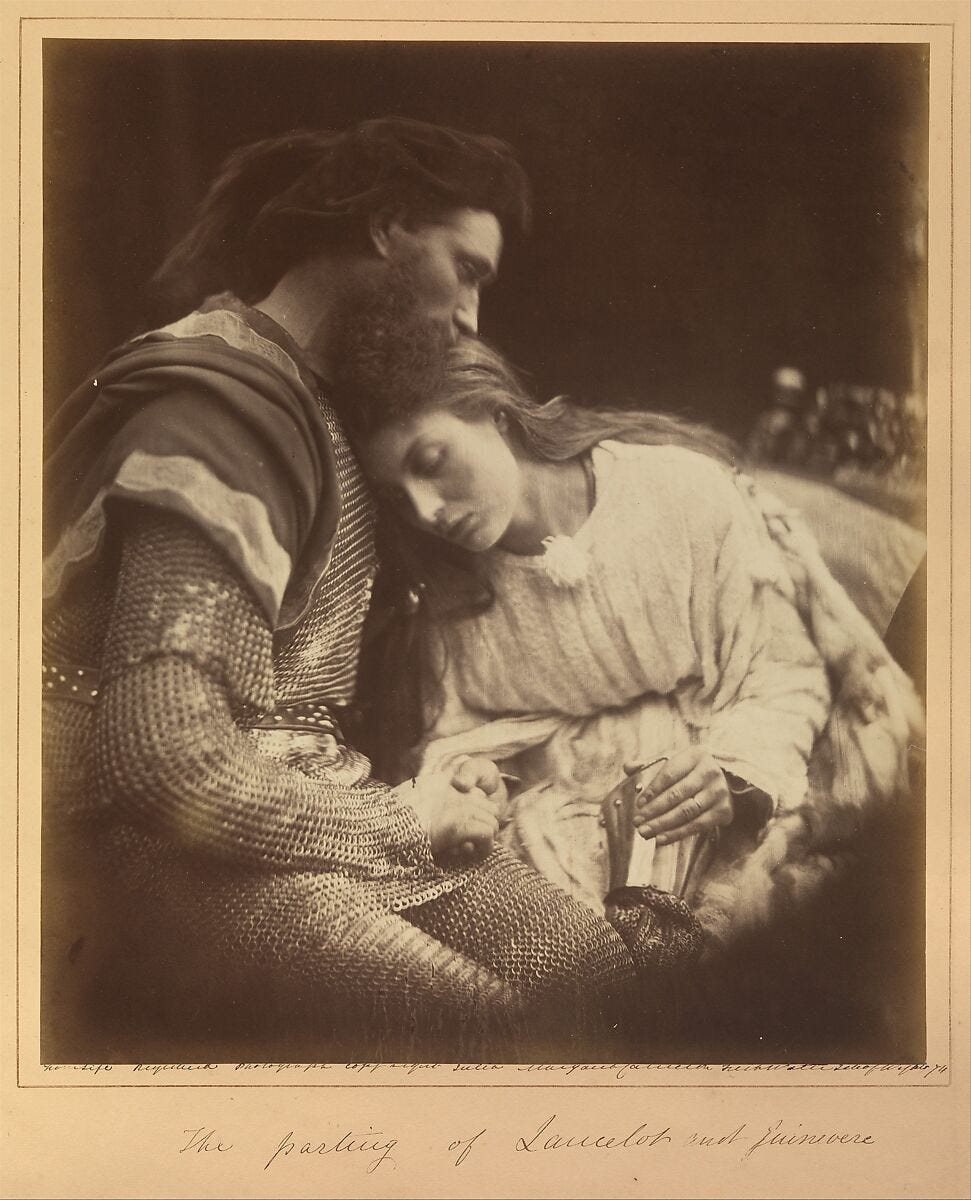
In his notes on Thomas Malory’s 15th century text Le Morte d’Arthur, Steinbeck narratively circles a knight who aims at perfection, fails, and doesn’t assure himself that perfection was never possible, Lancelot, not Galahad.
In his notes on Malory’s text, Steinbeck writes,
“That why I love Lancelot, I guess. He is tested. he fails the test and still remains noble.”
I first read these notes when I was 14, during the the summer before the 10th grade. I was raised with neither religion nor cultural practices, my upbringing was Pacific Northwest secular to a fault, and rooted in unconditional love and total freedom. Steinbeck’s knight gave me the shape of grace without a fear of God: The test exists, failure is existential, cowardice is undignified, and nobility is resilience crossed with continuity.
In Arthurian legend, Lancelot is tested (the Holy Grail, loyalty to Arthur, his love for Guinevere), he fails, and he remains noble if he doesn’t lie about the failure, if he still believes the standard exists and is worth aspiring towards. Conversely, Galahad, Lancelot’s son conceived with Elaine of Corbenic through sorcery, is the perfect knight who passes the test, who completes the quest for the Holy Grail, and ascends to heaven.
I’ve never regarded Steinbeck as a priest, but rather as a proctor. Steinbeck never exercises the power of the priest to grant absolution, and doesn’t even seem to desire it. Instead, he records Lancelot’s sins, explains his flaws and failings as a man, but allows him the status of knighthood without further condemnation. Lancelot is the test taker, and Steinbeck provides accountability; the mark is quantifiable proof that Lancelot tried, and didn’t succeed.
To Steinbeck, we all have to live with the consequences of our decisions, which incidentally is exactly what Hillary Clinton wrote in What Happened (2017).
At my very core, I don’t believe in redemption, for Jaime Lannister from A Song of Ice and Fire and for myself. A belief system that holds confession and prostration as the most righteous sources of absolution, one that regards guilt as purifying, is antithetical to my very ethos.
If atheism is the refusal to outsource honor and virtue to a higher power, my personal brand is rejecting the notion that since God doesn’t exist, there’s no moral test. Failure is possible and maybe even likely, but refusing to take accountability for it is worse. Nobility is what remains after the exam has been scored, after any hope for partial credit has dissipated, after grades have been submitted and set in stone. How do you live with yourself after you fail the people you love, after you fail yourself? How do you stay upright when your legs have been cut out from beneath you? How do you remain a knight?
In “On Self-Respect”, Didion writes that people with self-respect have the courage of mistakes; they know the price of things, both the price of taking the test and of failing the test. Self-respect isn’t synonymous with self-esteem, it’s not about being born pure and honorable and taking in pride in yourself as such. Self-respect and in turn, self-accountability is the ability to read the worst aspects of the file on yourself, the parts that you stuffed to the very back of the cabinet, without defending yourself or bending at the waist and begging for forgiveness from the mouth of God.
Lancelot is a man’s exam in a hall of kings, but I’ve always been more of the queen of peace, or swords if that suits. He is the rubric that I apply to the world, and provides me the permission structure to not force myself to be Galahad. I don’t want to be Lancelot though, I want to retain his mark after he falls short of it.
The test isn’t free, dignity and bravery come with dozens of strings attached, and pretending that there’s no standard in the first place is more egregious than falling short of one. Nobody’s watching you in the dark, there are no prizes for good little girls; you did what you said you never would, and now you have to live with it or you have to die.
I’m not dying anytime soon.